
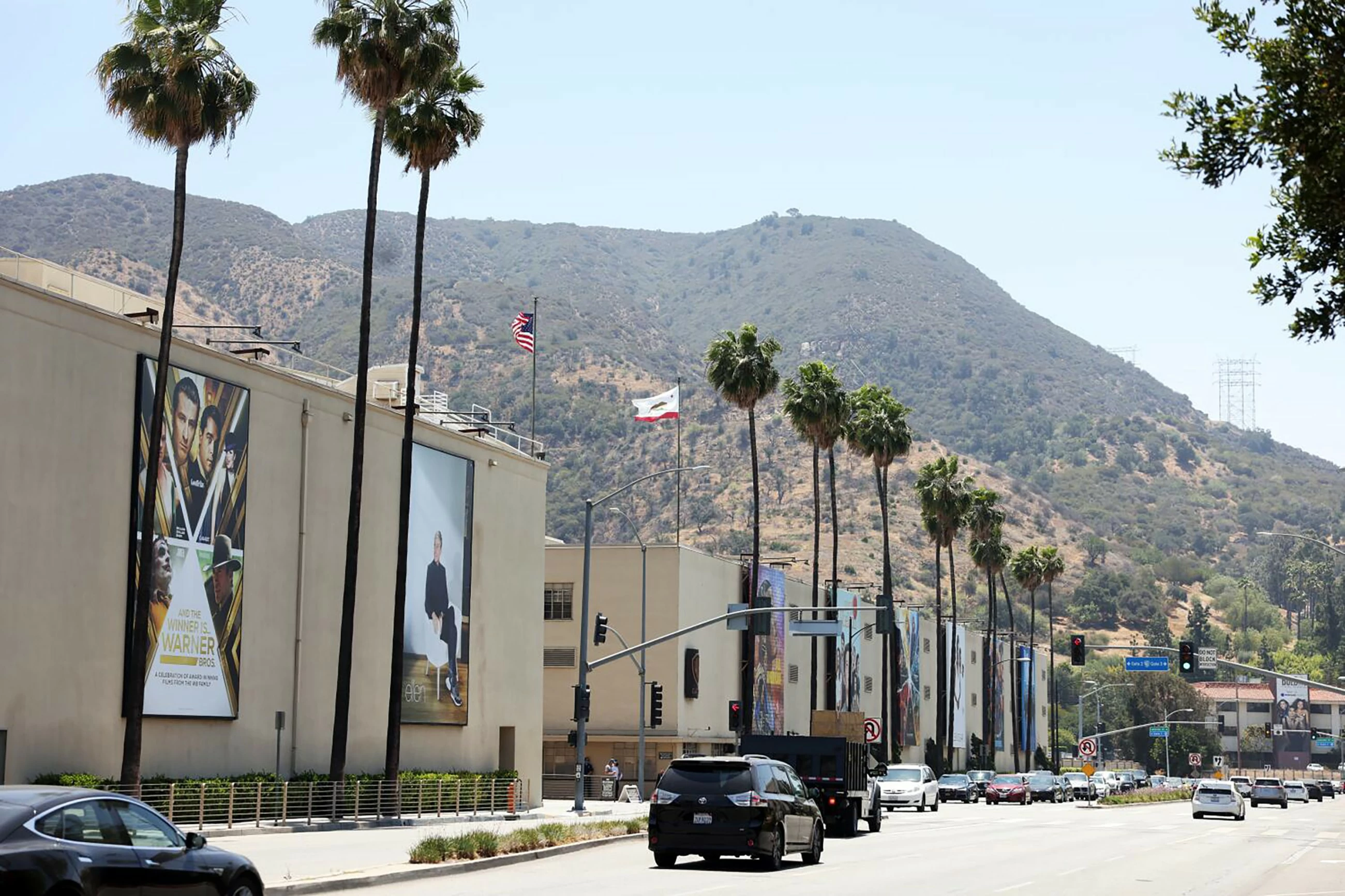
The water tower over Warner Bros' Burbank lot has watched a century of studio deals come and go. Nothing quite like this one, though. Down below, lawyers are fighting over who gets the keys to the place where "Casablanca" was shot and "The Big Bang Theory" filmed for 12 years. Paramount wants in. A California judge isn't ready to wave them through.
Related: The Actress Who Isn't Real: Inside California's Fight Over Tilly Norwood · ATMOSPHERIC RIVERS: THE SKY-BORNE PLUMBING THAT DECIDES CALIFORNIA'S WATER YEAR
This week Paramount agreed to pause the closing on its Warner Bros buyout, giving a judge more time to weigh a legal challenge. Small procedural move, massive stakes. This is a 110-acre Burbank lot that employs thousands of grips, editors, accountants and background actors. Merge two Hollywood giants and somebody's office gets consolidated. Somebody's show gets canceled. Somebody's job gets buried in a spreadsheet under "synergies."
The Delay: What the Judge's Pause Means
Paramount didn't volunteer to wait out of corporate goodwill. A court challenge forced the move. Close the deal now and risk a judge unwinding it later, or sit tight and play it safe. They picked safe. Safe is also slow, and in an industry where streaming numbers and stock prices shift by the week, slow costs money.
For Warner Bros staff in Burbank, the delay means more limbo. Nobody's been told to clear out a desk. Nobody's been told they're safe, either. Studio mergers run the same grim playbook every time: a "transition period" of vague memos, then layoff waves that land hardest on the people furthest from the executive suite. The longer this drags in court, the longer that sword hangs.
Bonta's Stand: California's Antitrust Weapon

California Attorney General Rob Bonta has positioned himself as the man trying to slow, if not sink, the Paramount-Warner Bros combination. He's said so publicly, framing his office's scrutiny around competition concerns and what a combined media giant would mean for California workers and consumers. Bonta has also flagged worries about CNN's editorial independence surviving a merger that folds it into an even bigger corporate structure. He's made clear he sees this as a fight worth having, with the Trump administration's Justice Department watching from the sidelines.
That's not small talk. A state attorney general going after a multibillion-dollar entertainment merger is a rare flex of California muscle over an industry the state usually just hosts rather than regulates into submission. Bonta's office has real pull here precisely because so much of this deal's physical infrastructure, the soundstages, the backlots, the film permits, sits inside California's borders. You can headquarter a media conglomerate in New York. You can't shoot "Barbie" on a soundstage that isn't there.
CNN, Content and the California Question
Buried inside the antitrust fight is a quieter argument about what happens to news and entertainment content once it's all under one corporate roof. CNN's fate has become a flashpoint, with critics warning that folding a cable news operation into a Paramount-controlled empire raises questions about editorial pressure and consolidation of control over what Americans watch and how it gets made. Bonta's public comments have leaned hard into those concerns, tying them to his broader case against the deal.
For Warner Bros' entertainment side, the stakes are more mundane but just as real. Every studio merger in memory has shipped with a promise of "no disruption to production" and delivered shelved projects, canceled shows and staff reductions dressed up as efficiency. Writers, editors and below-the-line crew in Burbank have lived through enough of these to know exactly how it ends. A judge weighing a challenge doesn't stop the anxiety. It just stops the paperwork.
What Burbank Waits For
Nobody outside a courtroom knows when this gets resolved. Paramount bought itself room to maneuver by agreeing to the delay. Bonta bought his challenge time to be heard on the merits rather than get steamrolled by a closing date. Somewhere between those two calculations sits an entire workforce that builds sets, runs cameras and answers phones for a studio that doesn't currently know who it's going to belong to next quarter.
The Warner Bros water tower isn't going anywhere. Whether the people who work underneath it keep their jobs is still, for now, somebody else's call to make in a Los Angeles courtroom.