
You've heard the Los Angeles River do things it absolutely cannot do. You've heard Manhattan traffic in a scene shot entirely on Cahuenga Boulevard. You've heard a Wyoming snowstorm recorded in a studio off Melrose Avenue, complete with wind, crunch, and that particular miserable silence that only exists between gusts. None of it was real. All of it worked.
Related: CALIFORNIA DOUBLES DOWN ON FILM TAX CREDITS TO STOP HOLLYWOOD EXODUS · NORTH HOLLYWOOD WAREHOUSE HOLDS A CENTURY OF FILM COSTUME HISTORY, STILL ON THE CLOCK
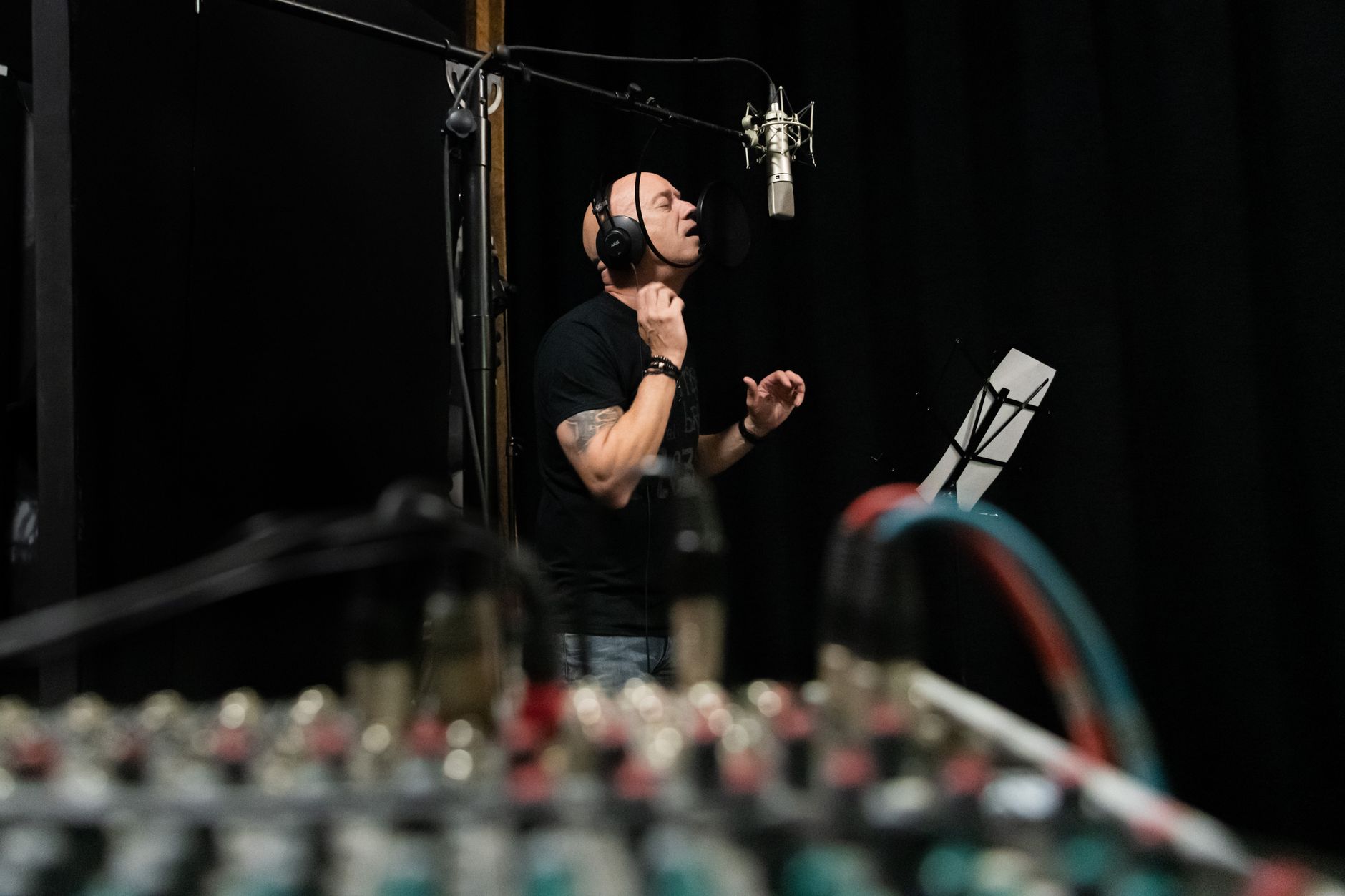
Hollywood has a dirty little secret that isn't really a secret: almost nothing you hear in a movie was captured when the camera was rolling. The dialogue gets re-recorded. The footsteps get added later. The ambience — that invisible sonic wallpaper that tells your brain "this is a forest" or "this is 1940s Chicago" — gets built from scratch, layer by layer, in a darkened room somewhere in the San Fernando Valley by people whose names roll by in six-point type at the end of the credits while everyone's already putting on their coats.
These are the sound designers, the Foley artists, the supervising sound editors, and the re-recording mixers. They are, without much argument, among the most skilled craftspeople in the entertainment industry. And Los Angeles has been the undisputed capital of their world for nearly a century.
The Trick Your Brain Never Catches
Here's how deep the illusion goes. When an actor walks across a hardwood floor on screen, the sound you hear was almost certainly recorded by a Foley artist walking across a different hardwood floor — maybe weeks later, maybe a mile from where filming happened — while watching the scene on a monitor and timing the steps to the frame. If the actor was wearing heels, the Foley artist is wearing heels. If there's a slight drag in the actor's gait, the Foley artist matches it. That level of precision, multiplied across every object touched, every door opened, every piece of clothing rustled, adds up to a full-time job that exists entirely in the service of making you feel nothing unusual at all.
The discipline traces back to Jack Foley, who worked at Universal Studios in the early sound era and pioneered the technique of recording sound effects in sync with picture. Universal's lot in Universal City, still running today, was part of the foundation of an industry that grew up around the studios in Burbank, Culver City, and the various sound stages scattered across the greater Los Angeles basin. The geography was intentional. Talent clusters near work, and the work was here.
Building a World Out of Thin Air
Sound design as a distinct creative role got its defining moment in the 1970s, largely through the work of Walter Murch on films including "Apocalypse Now" and "The Conversation," both produced through the Bay Area's American Zoetrope. Murch, working in California, essentially invented the vocabulary the industry still uses. He coined the term "sound designer" himself. Before him, the role didn't have a name.
What sound designers actually do is build sonic worlds from component parts, most of which are not what they appear to be. The lightsaber hum in "Star Wars" was a combination of a movie projector's idling motor and interference from a television set, famously discovered by Ben Burtt when he walked past a TV with a broken microphone lead. The T-Rex footsteps in "Jurassic Park" were made using recordings of a woman in high heels on a hard floor, pitched way down. The rain in countless films is often dried peas on a snare drum. None of this is cheating. It's craft.
Los Angeles has the infrastructure to support it at a scale nowhere else on earth can match. The city has dozens of dedicated dubbing stages, Foley stages, and ADR (automated dialogue replacement) facilities. It has a deep bench of working professionals who've spent careers doing nothing else. The unions — IATSE in particular — have maintained the training pipeline and the pay structure that makes it possible to build an actual career out of knowing how a shoe sounds on gravel versus cobblestone.
The Streaming Squeeze
But the industry these workers built is under real pressure. The streaming boom that exploded budgets for prestige television also compressed timelines in ways that sound departments feel first and hardest. A feature film might allow weeks of Foley recording and months of mixing. A streaming series, delivered on a content calendar, might allow a fraction of that. The craft survives, but it gets squeezed.
There's also the automation threat, which is newer and more pointed. AI audio tools have advanced fast enough that basic ambient sound design — the stuff that used to require a human with a library of recordings and the judgment to know which one fits — can now be roughed out by software. Studios have started experimenting. Nobody's replaced a supervising sound editor with a chatbot yet, but the lower rungs of the work, the entry-level library management, the routine sound effects pulls, are already being automated in places.
The people who do this work will tell you, correctly, that a machine doesn't know why a particular door creak feels emotionally right in a given scene. They're not wrong. They're also aware that budget-conscious production executives don't always care about the difference between right and close enough.
The Names You'll Never Know
Richard King has won four Academy Awards for sound design, most of them for Christopher Nolan films. Gary Rydstrom has won seven Oscars across sound mixing and sound editing, much of it for work at Skywalker Sound, the Marin County facility George Lucas built specifically to give sound work a home outside the traditional studio system. These are among the most decorated craftspeople in the history of the medium. Ask a hundred serious film fans to name them and you'll be lucky to find three who can.
That anonymity is, in a strange way, the whole point. The best sound work is the work you never consciously notice. The moment you think "wow, great sound design," something has probably gone slightly wrong. The goal is total immersion, total belief. When it works, you're not in a theater. You're in the jungle, or the war, or the storm.
Somewhere in Burbank right now, in a room with no windows and very thick walls, someone is recording the sound of a briefcase latch for the forty-third take. They'll get it right. You'll never know they tried.