
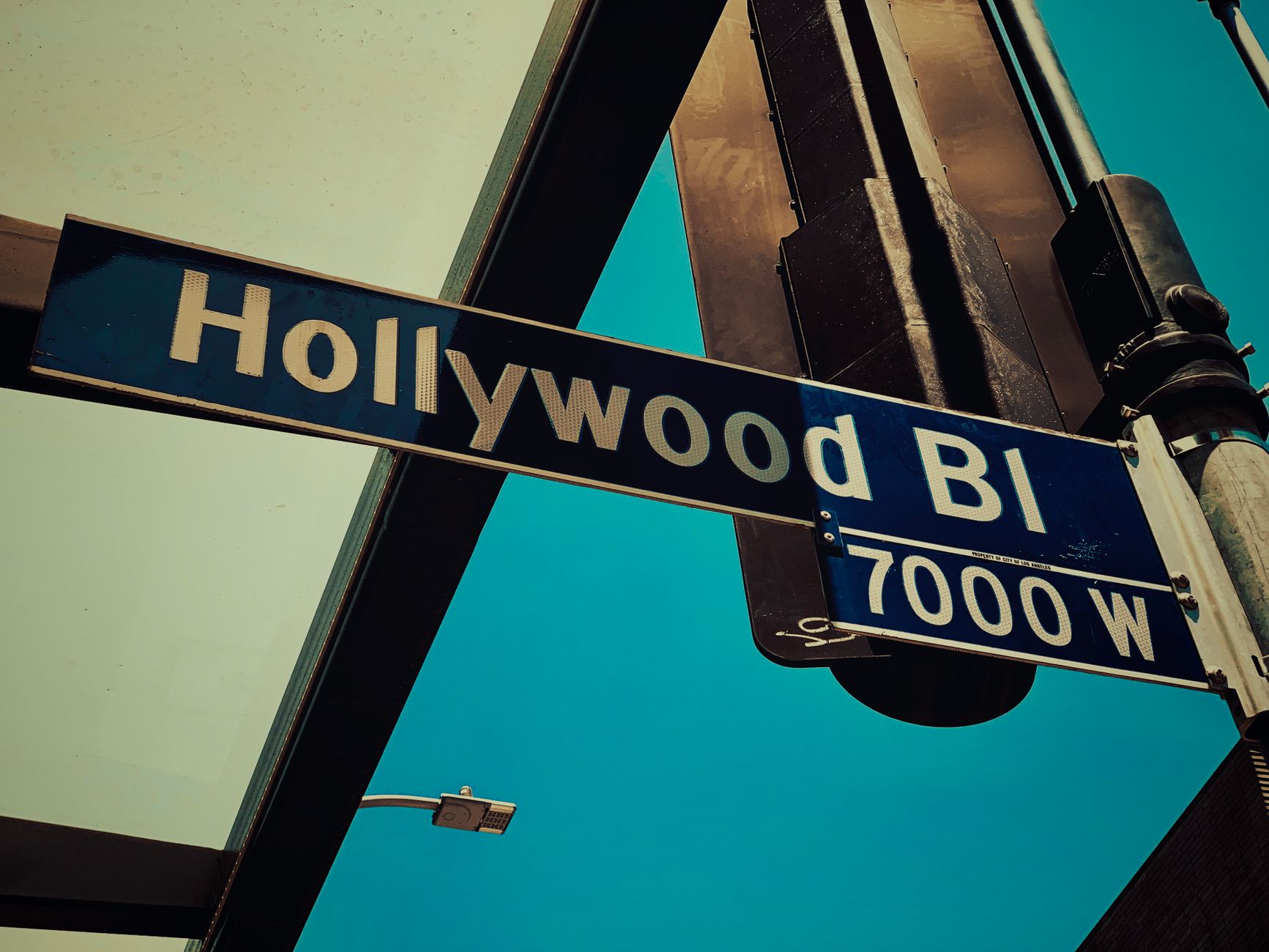
Drive down Cahuenga Boulevard on any given Tuesday morning and you'll pass a parking lot attendant reading a script, a grip hauling cable past a nail salon, and a woman in period costume waiting for a crosswalk signal like she's got nowhere to be. Nobody looks twice. In Hollywood, this is just the weather.
Related: NORTH HOLLYWOOD WAREHOUSE HOLDS A CENTURY OF FILM COSTUME HISTORY, STILL ON THE CLOCK
The zip code 90028 is a strange piece of American real estate. It doesn't look like power. The sidewalks along Hollywood Boulevard have seen better decades. Rent on some of these production buildings would make a Manhattan landlord blush, while the storefront next door sells tourist trinkets and two-dollar empanadas. And yet, within a few square miles, more of the global entertainment industry gets decided, financed, and argued over than almost anywhere else on the planet.
That wasn't an accident. It was a century in the making, and it's messier, more resilient, and more human than the myth suggests.
Why Here
The original draw was practical, almost embarrassingly so. In the early 1900s, filmmakers fleeing Edison's patent-enforcement thugs on the East Coast discovered that Southern California had something magical: light. Reliable, year-round, diffused morning light that made early film stocks sing. They also found cheap land, varied terrain within short driving distance, and a sheriff who wasn't particularly interested in chasing them around.
By 1911, the Nestor Film Company had set up shop on the corner of Sunset and Gower, a corner still called Gower Gulch, and the land grab was on. Within a decade, the major studios had clustered across a corridor stretching from Hollywood east through Los Feliz and west toward what would become West Hollywood and Culver City. The geography locked in early and, remarkably, it held.
Universal has been in essentially the same spot in the hills above Lankershim Boulevard since 1915. Paramount, the only major studio still physically inside Hollywood proper, has operated on Melrose Avenue since 1926. These aren't sentimental choices anymore. They're load-bearing walls of an industry ecosystem that built itself around their addresses.
The Invisible Infrastructure
What most people miss when they talk about Hollywood is the depth of the bench sitting behind the marquee names. The studios and the agencies, CAA on Avenue of the Stars, WME in Beverly Hills, ICM's old haunts, get the profiles. But the reason the industry stays rooted here is everything else.
Within a ten-mile radius of the Capitol Records building on Vine Street, you can find virtually every specialized vendor the film and television industry requires: optical houses, ADR stages, prop warehouses, costume fabricators, title designers, music clearance attorneys, stunt coordinators, dialect coaches, payroll companies that specialize exclusively in union entertainment contracts, and at least a dozen restaurants where the booths are explicitly understood to be for pitch meetings.
That concentration didn't happen in Austin. It didn't happen in Atlanta, despite the tax credits. It exists here because it took eighty years to build, and you can't replicate it by cutting someone a check. A production designer in a crunch at 9 p.m. on a Thursday can get a specific hand-painted vintage label reproduced and delivered to a stage in Burbank by call time the next morning. That's not magic. That's a supply chain stress-tested since before television existed.
The Agencies That Eat the Town
If the studios are Hollywood's body, the talent agencies are its nervous system. And for most of the industry's history, the agency business was as geographically concentrated as anything else. A small cluster of power brokers operating within a few exits of each other on the 405.
Creative Artists Agency, founded in 1975 by five agents who walked out of William Morris on the same day, eventually built its signature I.M. Pei-designed headquarters in Century City. A building so distinctive it functions as a kind of secular temple to the deal. WME, which absorbed the original William Morris Agency in 2009, operates a few miles away. The geographical proximity isn't incidental. The agency business runs on information, and information travels fastest when the people who hold it are running into each other at the same three lunch spots on Brighton Way.
The writers' strike of 2023 and the actors' strike that ran alongside it for much of that year rattled the ecosystem hard. Picket lines outside Netflix's Hollywood offices and Amazon's Culver City campus became a daily sight for months. The strikes ended with new contracts, but they also accelerated a reckoning over streaming residuals and artificial intelligence that the industry is still working through. The geography of protest, as it turned out, was the same as the geography of production. Everyone knew where to show up.
The Valley's Quiet Dominance
There is a persistent, slightly defensive joke in Burbank and Studio City that the real Hollywood has always been on the other side of the hill. It's not entirely wrong.
Warner Bros. sits on 110 acres in Burbank. Disney's main campus is six blocks away. NBC has broadcast from Burbank since 1952. The concentration of production infrastructure in the San Fernando Valley, stages, back lots, post-production houses, the entire apparatus of television manufacturing, is staggering once you start counting. The Valley doesn't have the Walk of Fame or the mythology, but it has the soundstages, and the soundstages are what actually matter on a Monday morning.
Burbank's civic identity is so intertwined with the industry that the city's own promotional materials have at various points described it as the "Media Capital of the World," a claim that Los Angeles proper would contest loudly, but one that has more square footage of active production behind it than most people realize.
What Stays and What Doesn't
Streaming changed the math on a lot of things: development budgets, release windows, the economics of the mid-budget drama. But it didn't dissolve the zip code. Netflix built its own campus on Sunset Boulevard in Hollywood. Apple's entertainment operation planted its flag in Culver City. Amazon took over the old MGM lot, also in Culver City, which is about as loaded a piece of real estate symbolism as the industry could manufacture.
The executives, the lawyers, the agents, and the deal-makers stayed put. The work migrated to New Mexico, to Georgia, to the UK, chasing incentives and lower below-the-line costs. But the decisions about what gets made, who makes it, and for how much money still get made in a corridor running roughly from Culver City to Burbank, with a detour through Beverly Hills and a spiritual home on the corner of Hollywood and Vine.
The neon on that corner has been replaced three times since the 1940s. The hustle underneath it hasn't changed once.