

Fire's out. Evacuation orders lifted. News crews gone. California keeps paying anyway, for weeks, months, years.
Related: The Shove Heard Across a State: How One Burning Car Became California's Fourth-Largest Wildfire · California's New AI Labeling Law Just Put Every Chatbot Company on Notice
New research into major wildfire events across North America and Europe makes something uncomfortable plain: the smoke, the particulates, the chemical residue left behind by big fire seasons don't vanish when the last hotshot crew drives home. That stuff lingers in the air, in the soil, in the lungs of people who thought the worst was over.
For California, a state that has lived through some of the most destructive fire years on record, that's not abstract. It's a running tab that never closes.
What the Smoke Leaves Behind

When a wildfire burns at scale, and California has had no shortage of those, from the Camp Fire's destruction of Paradise in November 2018 to the back-to-back sieges of recent summers, it sends more than visible smoke into the atmosphere. Fine particulate matter, known as PM2.5, is small enough to slip past the body's natural defenses and settle deep in the lungs. These particles can travel thousands of miles. During California's worst fire seasons, air quality alerts went out as far east as New York.
The local picture is grimmer. Communities near burn zones, or downwind of them, absorb the highest concentrations. Research into past fire events on both sides of the Atlantic shows the atmospheric and health effects don't resolve on a news cycle's timeline. Studies of major North American fire seasons have found measurable air-quality degradation lasting well beyond the active burn period, as smoke aerosols cycle through weather systems and settle repeatedly over the same regions.
California's Central Valley, already among the most air-polluted regions in the country due to geography and agriculture, gets hit especially hard. The valley's bowl shape traps particulates. Add wildfire smoke to an already compromised airshed and the numbers turn alarming fast.
The Years-Long Hangover
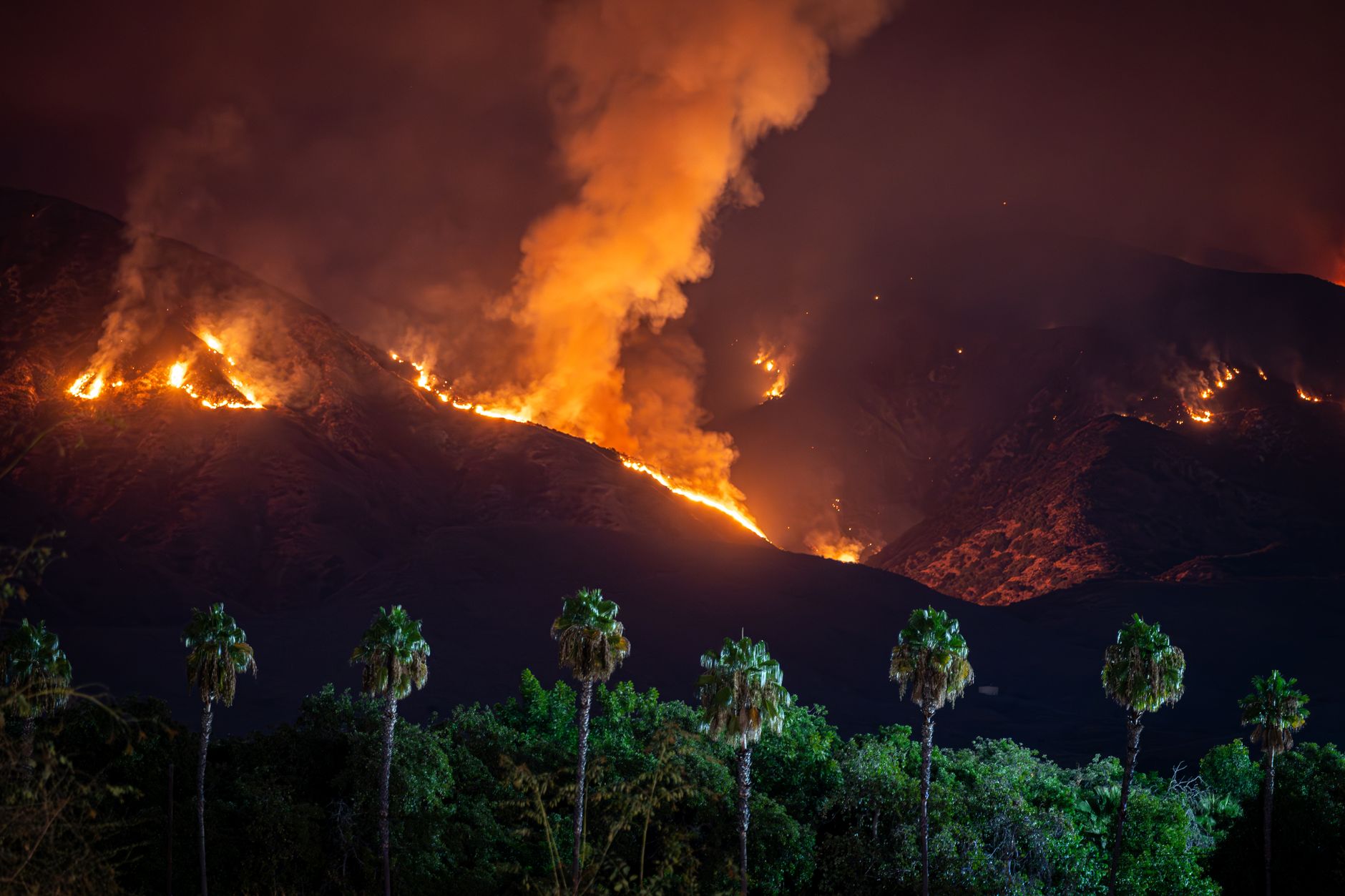
What makes the latest findings particularly pointed is the timeframe. Prior analyses of major fire events, including seasons that scorched significant portions of western Canada and the U.S. interior, suggest atmospheric and ecological effects can persist for two to four years after the fires themselves. That includes changes to local precipitation patterns, sustained spikes in particulate exposure, and disruption to the kind of cloud formation California desperately needs for rain.
Wildfire smoke high in the atmosphere can affect how sunlight interacts with moisture. It interferes with rain-producing cloud formation by changing the behavior of water droplets. For a state perpetually caught between drought and flood, that's a meaningful complication. California has spent years praying for atmospheric rivers to fill its reservoirs. Smoke-altered skies don't help.
The 2020 fire season, which burned more than 4 million acres in California alone and turned the San Francisco Bay Area sky an apocalyptic orange on Sept. 9 of that year, is still being studied for its long-term atmospheric fingerprint. Researchers have noted lingering particulate signatures in air monitoring data well into 2021 and beyond.
The Towns That Got the Worst of It
Plumas County. Butte County. Shasta County. These aren't dots on a state map. They're communities that went through the fire and then kept going through the aftermath, breathing air that monitors flagged as hazardous long after local emergency declarations expired.
Paradise, Calif., essentially erased by the Camp Fire on Nov. 8, 2018, sits at roughly 1,700 feet in the Sierra Nevada foothills. Survivors who returned to rebuild have reported persistent respiratory issues. Health researchers tracking Butte County populations in the years since have documented elevated rates of cardiopulmonary stress tied to long-term smoke exposure, not just the acute burn event itself.
Smaller communities along the Highway 32 and Highway 36 corridors in Northern California, many of them low-income, many of them older, many without access to quality air filtration, faced the longest exposure windows with the fewest resources to manage them.
A State Running Out of Buffer
California has invested heavily in air quality monitoring infrastructure. The California Air Resources Board runs one of the densest air-monitoring networks in the world, and the state has some of the strictest vehicle and industrial emissions standards anywhere. None of that was designed for what wildfire seasons have become.
The sheer volume of particulates dumped into California's atmosphere during a major fire year can exceed, in a matter of days, what industrial and transportation sources emit over months. It's the kind of math that makes regulators wince. The state can control tailpipe emissions. It cannot, at least not yet, control the smoke from a fire burning in Siskiyou County or across the Oregon border.
Climate scientists have been consistent on the trajectory: fire seasons in the American West are getting longer and more intense as temperatures rise and vegetation dries out earlier each year. More smoke, more frequently, with less recovery time between events. The research into multi-year atmospheric effects suggests California may be stacking one fire season's chemical legacy directly on top of the last one's.
The Invisible Season
There's a particular kind of summer day in California that looks fine on the surface. Blue sky, warm sun, kids outside. Air quality monitors quietly flashing orange or red. Not the thick, dark smoke days that make the news. The invisible ones, when PM2.5 levels are elevated and nobody's issued an alert loud enough to cut through.
That's exactly what research into long-term wildfire effects is most worried about. Not the apocalyptic orange sky. The slow accumulation of exposure, season after season, in communities that don't have the resources to run HEPA filters in every room.
California's fire scars heal faster than its air does. That gap is getting harder to ignore.